
Domestic Workers
Pacific Institute of Workplace Relations (PIoWR) — Fair Conditions At Work
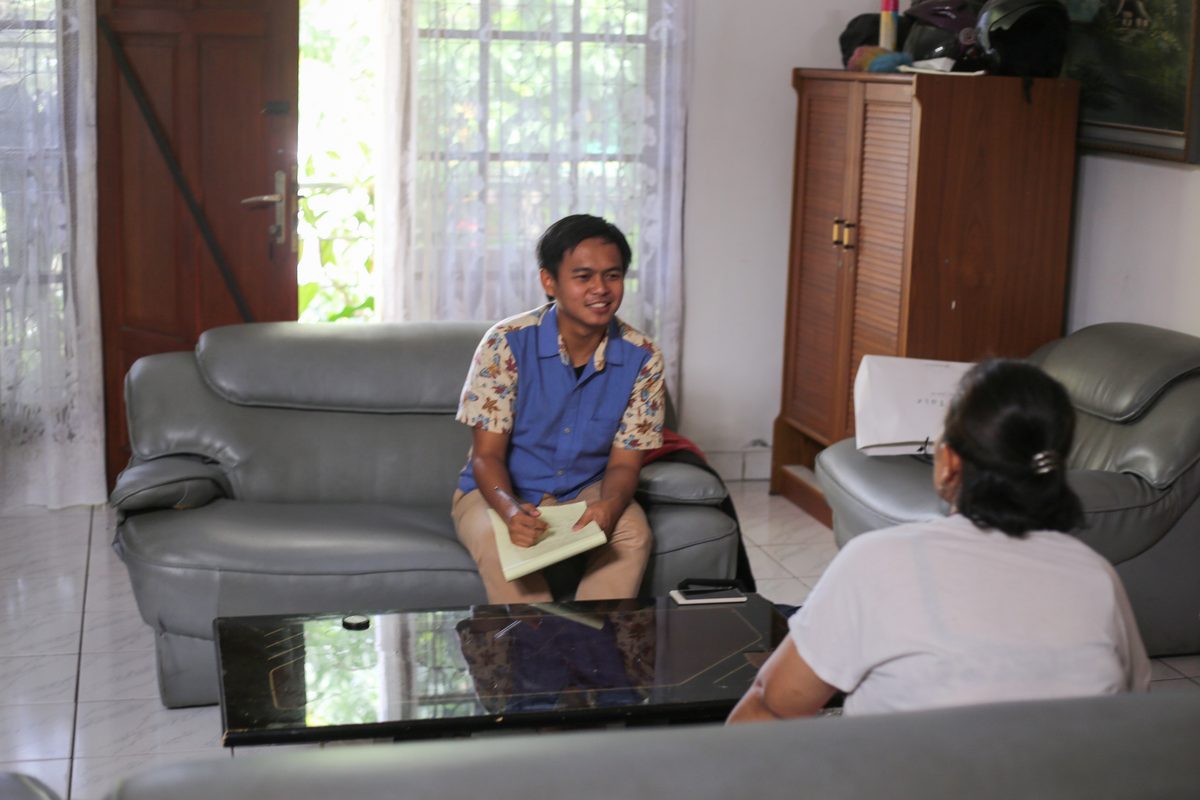
Photo: Marielle Velander / Wikimedia Foundation, CC BY-SA 4.0, via Wikimedia Commons (resized)
This page is for: Household and domestic workers — cleaners, carers, nannies, cooks, gardeners and drivers working in private homes.
Cleaning, cooking, caring for children and older people — domestic work keeps households running, but it happens behind closed doors where workers can be easily overlooked. This page sets out what fair treatment looks like, what to agree before you start, and where to find help.
On this page: Know your rights · Checklist · Find help near you · Short lessons · Worker voices · Meetings and publications
Share this page: WhatsApp · Facebook
How these rules apply
- ILO Convention C189 (Domestic Workers, 2011) sets out decent work for people who work in private households.
- No Pacific Island country has ratified C189 (ILO NORMLEX, checked 2 October 2026). So C189 is a guide to what fair treatment looks like, not binding law in the Pacific. Your national employment law may still protect you. Ask your labour ministry or a union.
- These cards are general information, not legal advice.
Know your rights
Each card can be saved as a PDF to print or share. All rights cards.
Your terms of work
Working in someone's home is real work. You should know your terms clearly.
What you should get
- Your terms explained in a way you can check and understand — preferably a written contract (ILO C189, Art. 7).
- The terms should cover: employer's name and address, workplace address, start date and length, type of work, pay and how often, normal hours, paid leave and rest, food and accommodation if any, trial period, repatriation if any, and how the job can end (C189, Art. 7).
- If you are recruited in one country to work in another: a written job offer or contract, enforceable where you will work, before you cross the border (C189, Art. 8).
Check for
- Your duties are written down — what you will and will not do
- Your pay, hours and day off are written down
What you can do
- Ask for your terms in writing, even a simple signed letter. Keep a photo of it.
Sources: ILO C189 Domestic Workers Convention, 2011 (NORMLEX)
Save this card as PDF · Share on WhatsApp · Share on Facebook
Your pay
You should be paid in money, regularly, and fairly.
What you should get
- Minimum wage coverage where a minimum wage exists, and pay set without discrimination based on sex (C189, Art. 11).
- Pay at least once a month, directly to you (C189, Art. 12).
- Only a limited part of your pay can be 'in kind' (like food or a room), and only if you agree, it is for your own use, and its value is fair (C189, Art. 12).
- Fees charged by private employment agencies must not be taken from your pay (C189, Art. 15).
Check for
- You know your pay rate and pay day
- You get a record each time you are paid
What you can do
- Write down every payment: date, amount, and who paid you.
Sources: ILO C189, Art. 11, 12 and 15 (NORMLEX)
Save this card as PDF · Share on WhatsApp · Share on Facebook
Hours and rest
Being 'always on call' is still work.
What you should get
- The same treatment as other workers for normal hours, overtime pay, daily and weekly rest and paid annual leave (C189, Art. 10).
- Weekly rest of at least 24 hours in a row (C189, Art. 10).
- Time when you must stay available for the household and are not free to use as you wish counts as working time, to the extent national law or agreements set (C189, Art. 10).
Check for
- Your day off is agreed and written down
- Night-time or on-call duties are agreed and paid
What you can do
- Keep a simple diary of your start and finish times.
Sources: ILO C189, Art. 10 (NORMLEX)
Save this card as PDF · Share on WhatsApp · Share on Facebook
Safety, respect and protection from abuse
No one has the right to hurt, threaten or harass you.
What you should get
- Effective protection against all forms of abuse, harassment and violence (C189, Art. 5).
- A safe and healthy working environment (C189, Art. 13) — for example, safe use of cleaning chemicals and equipment.
- Social security protection, including maternity, no less favourable than other workers (C189, Art. 14).
- Children under the minimum working age must not do domestic work, and young workers must not miss compulsory schooling (C189, Art. 4).
Check for
- You know where to go if you feel unsafe
What you can do
- If you are in danger, leave to a safe place and contact local police or emergency services.
Sources: ILO C189, Art. 4, 5, 13 and 14 (NORMLEX)
Save this card as PDF · Share on WhatsApp · Share on Facebook
If you live in the household
Living where you work should not mean giving up your privacy or your freedom.
What you should get
- You are free to agree with your employer whether or not you live in the household (C189, Art. 9).
- If you live in: decent living conditions that respect your privacy (C189, Art. 6).
- You do not have to stay in the house or with the family during your rest days, daily rest or leave (C189, Art. 9).
- You keep your own travel and identity documents (C189, Art. 9).
Check for
- You have your own sleeping space
- Your passport or ID is with you
What you can do
- If your documents are taken and not returned, that is a warning sign. Ask for help.
Sources: ILO C189, Art. 6 and 9 (NORMLEX)
Save this card as PDF · Share on WhatsApp · Share on Facebook
Working away from home
If you work in another country or island, plan your way home.
What you should get
- Migrant domestic workers should get a written job offer or contract before crossing the border (C189, Art. 8).
- Countries must set out when migrant domestic workers are entitled to repatriation at the end of the contract (C189, Art. 8).
- Countries should regulate private employment agencies and investigate complaints about them (C189, Art. 15).
Check for
- Your contract says how and when you get home, and who pays
What you can do
- Leave a copy of your contract and your employer's address with your family.
Sources: ILO C189, Art. 8 and 15 (NORMLEX)
Save this card as PDF · Share on WhatsApp · Share on Facebook
Making a complaint
Domestic workers have the same right to justice as other workers.
What you should get
- Access to courts, tribunals or other dispute services on terms no less favourable than other workers — by yourself or through a representative (C189, Art. 16).
- Effective and accessible complaint mechanisms, and labour inspection suited to domestic work (C189, Art. 17).
- Freedom to join a union or workers' organisation of your choice (C189, Art. 3).
Check for
- You know the name of your country's labour ministry or department
What you can do
- Keep your evidence: messages, payment notes, your hours diary.
- Read the lesson 'Raising a complaint safely'.
Sources: ILO C189, Art. 3, 16 and 17 (NORMLEX)
Save this card as PDF · Share on WhatsApp · Share on Facebook
Who to call
You do not have to sort this out alone.
What you should get
- Your national labour ministry or department — verified contacts are in 'Find help near you'.
- Your national trade union centre — for example, in Fiji, the Fiji Trades Union Congress (+679 331 5377).
- If you are in immediate danger: local police or emergency services.
Check for
- At least one number saved in your phone and one written on paper
What you can do
- Tell someone you trust where you work and how to reach you.
Sources: PIoWR Find help directory · FTUC contact page
Save this card as PDF · Share on WhatsApp · Share on Facebook
Checklist
Before you start, and while you work. Print it, tick it, keep it.
Before you start
- Agree your terms in writing: duties, pay, pay day, hours, day off and notice.
- Agree whether you will live in the household. It should be your choice.
- If an agency placed you, make sure its fees will not be taken from your pay.
- Keep your ID and travel documents yourself.
While you work
- Keep a diary of your hours and your days off.
- Write down every payment: date and amount.
- Ask for safe equipment and gloves for cleaning chemicals.
- Save the number of your labour ministry and a union.
If something goes wrong
- Write down what happened and when.
- Talk to someone you trust, a union, or your labour ministry.
- If you are in danger, go to a safe place and call the police.
Find help near you
Choose your country to see verified contacts. Every contact links to the page where we checked it.
- Your labour ministry or department — verified contacts for Cook Islands, Fiji, French Polynesia, Kiribati, New Caledonia, PNG, Samoa, Solomon Islands, Tuvalu and Vanuatu.
- Your national trade union centre — e.g. Fiji Trades Union Congress (+679 331 5377).
- If you are in immediate danger: local police or emergency services.
- We have not yet verified any domestic-worker-only organisation in the Pacific. If you know one, tell us.
Open the full Find help directory
Short lessons
About five minutes each, with a short self-check quiz. The answers are shown after you check.
Worker voices
Have you worked in someone's home? Your experience can help other domestic workers know their worth.
Stories from domestic workers
- Fijian domestic workers in Tonga describe 18-hour days — Talanoa o Tonga, reporting an ABC The Pacific investigation, 7 April 2025
- Housemaids and nannies 'hoodwinked' across Polynesia — Fiji Sun, 17 May 2021
- A domestic worker who helps others know their rights — ILO, 11 March 2021
- Recruitment debts and confiscated documents — Amnesty International, 21 November 2013
Stories are summarised from the published sources linked; PIoWR did not collect them.
Read these stories in full on the Worker stories page · Video coming soon
Share your story
PIoWR has not yet published any stories collected by us. When you share yours, these rules apply:
- Your consent first. Nothing is published without your written consent. You can say no at any time before publishing, and ask us to take your story down later.
- You choose your name. Stories are anonymous unless you ask to be named. We will not show your face unless you want us to.
- You check it first. We send you the final text before it goes up.
- Your safety comes first. We remove details that could identify you or your employer if that could put you at risk.
- Under 18? We need a parent's or guardian's consent too.
- No payment, no pressure. Sharing is voluntary and does not affect any help you receive.
Share your experience: Write to PIoWR with the subject line "Worker voices — Domestic Workers". You can write in English or your own language.
Meetings and publications
Meetings to follow
- Pacific Labour Ministers Meeting (Pacific Islands Forum) · Endorsed at Koror, Palau, 31 Aug–3 Sep 2026; first sitting date not yet set · Highlight
From the library
- ILO (2012) — Achieving decent work for domestic workers: An organizer's manual to promote ILO Convention No. 189 and build domestic workers' power
- ILO (2021) — Making decent work a reality for domestic workers: Progress and prospects in Asia and the Pacific ten years after the Domestic Workers Convention
- ILO (2024) — From global care crisis to quality care at home: the case for including domestic workers in care policies
- ANU — Book review: House-Girls Remember: Domestic Workers in Vanuatu
Search the full library · Ask the Library
Share this page: WhatsApp · Facebook
Join PIoWR on WhatsApp — link coming soon
Join PIoWR on Viber — link coming soon
Pacific Institute of Workplace Relations — Fair Conditions At Work